

Study in Australia
Australia offers high-quality, closely regulated education, part-time work rights while you study and a graduate visa after you finish. Here is how to plan it well.

Why students choose Australia
Australian education is regulated by national bodies: TEQSA for universities and higher education, and ASQA for vocational training. Every course offered to international students must be registered on CRICOS, and the ESOS framework protects your tuition fees if a provider cannot deliver your course. Students can work up to 48 hours a fortnight while their course is in session, and eligible graduates can apply for a Temporary Graduate visa.
Intakes and entry requirements
Most universities have two main intakes, in February and July, and some offer more. Vocational providers and colleges often start courses throughout the year. You need the academic results your course asks for and an English test score that meets both the provider's and the Student visa requirements.
Current settings to know
The Government sets a National Planning Level for new international students: 295,000 for 2026 and again for 2027. It is not a cap on visas, but it affects how quickly applications for each provider are processed. Choosing a well-established provider and applying early helps.
From enquiry to arrival
- Choose a course that fits your previous study and career goals.
- Apply for admission and accept your offer to receive a Confirmation of Enrolment.
- Arrange health cover and funds and prepare your Genuine Student answers.
- Apply for your Student visa and wait for the grant.
- Prepare for arrival: accommodation, a bank account and your first weeks.
Plan your studies in Australia
-
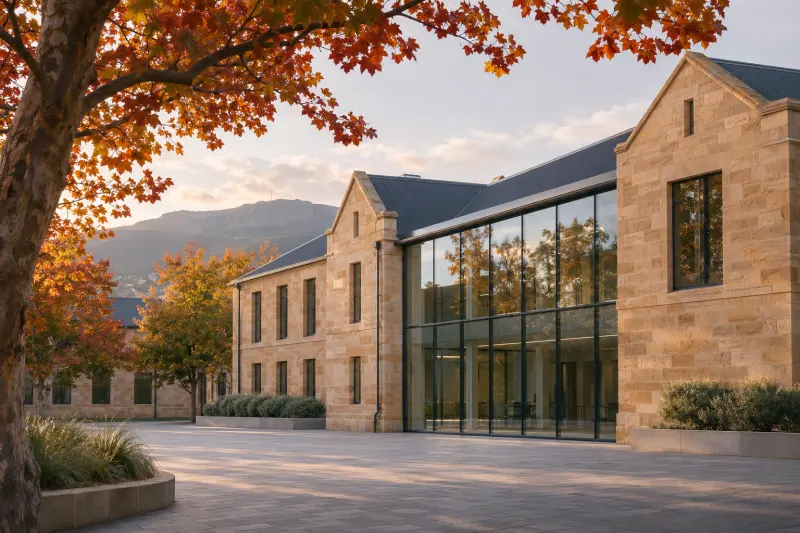 Study in Tasmania
Universities, TasTAFE, regional benefits and student life in Hobart and Launceston.
-
 Education system
AQF levels, TAFE and university, English courses, intakes and the rules that protect students.
-
 Costs and living
Tuition, living costs, health cover and working while you study.
-
 Popular courses
Nursing, IT, engineering, accounting, early childhood and trades.
Questions people ask
What are the main intakes in Australia?
Most universities start in February and July, and some offer additional intakes. Vocational courses often have several start dates during the year.
Can I work while studying in Australia?
Yes. Student visa holders can work up to 48 hours a fortnight while their course is in session and unlimited hours during scheduled breaks.
Is there a cap on international students in Australia?
There is a National Planning Level, 295,000 new students for 2026 and 2027. It is not a visa cap, but it affects processing priority for each provider.
Official sources
We check this page against the official information below and last reviewed it on 14 November 2026. Rules, fees and processing times change, so confirm the current position before you apply.

